

Contemporary Facades: When Composite Wood Finally Enables a Controlled Mix of Materials Over Time
A contemporary facade is no longer judged at the moment of completion. It is judged five, ten, or fifteen years later. And that is precisely where many projects begin to show their weaknesses.
For a long time, the question of facade materials was mainly approached through architectural expression. Choosing wood, concrete, glass or aluminum was first and foremost a matter of aesthetic intention — a language, a stance toward context and use.
Today, however, architectural prospecting has shifted. The drawing itself is no longer the main challenge. The real issue has become how well the project holds up over time, long after the building has been delivered.
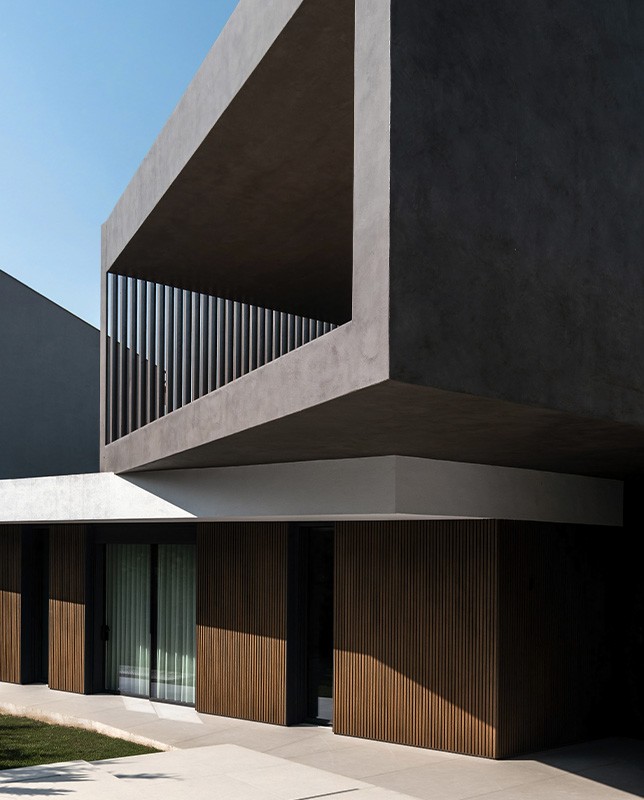
In a context where contemporary facades increasingly rely on the dialogue between materials, co-extruded composite wood is gradually emerging as a true architectural tool. Not as a passing trend, but as a rational response to a difficulty widely shared by designers: controlling aesthetic ageing.
Material Mix: A Standard That Has Become Critical
Contemporary architecture has established the mix of materials as a common design language. Aluminum, glass, concrete, stone and wood now coexist in the majority of projects — whether collective housing, public facilities or commercial buildings.
Within this composition, wood plays a special role. It brings warmth, rhythm and humanity to facades that are often highly graphic. It introduces a sensitive vibration into compositions dominated by industrial or mineral materials.
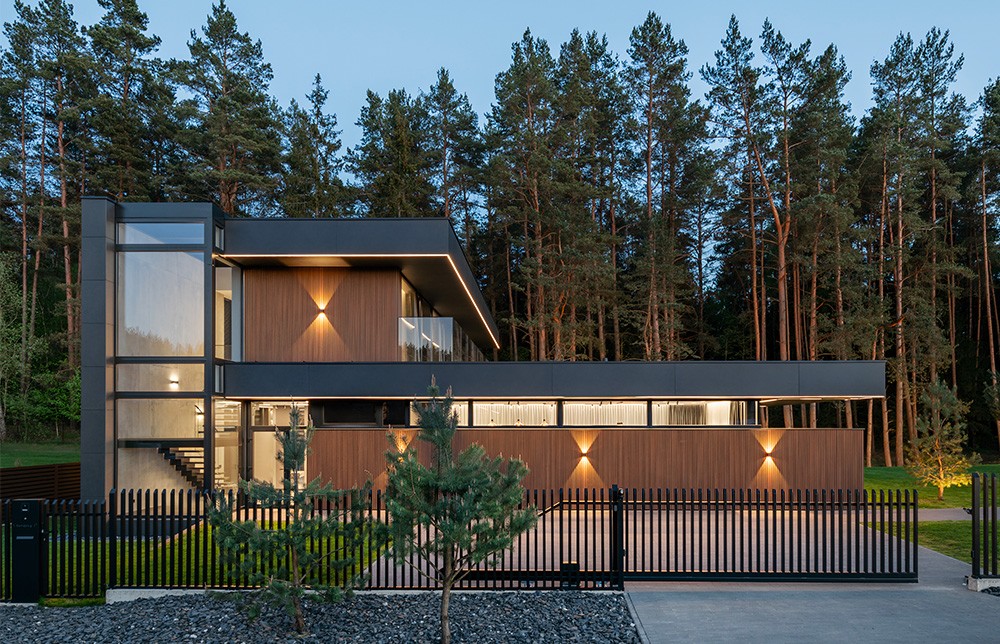
But on a facade, this expressive quality can also become a vulnerability.
Natural wood turns grey, stains, ages unevenly depending on exposure, and evolves at a radically different pace from other materials.
This ageing is not a flaw in itself. It can even be intentionally sought in certain contextual or vernacular architectures.
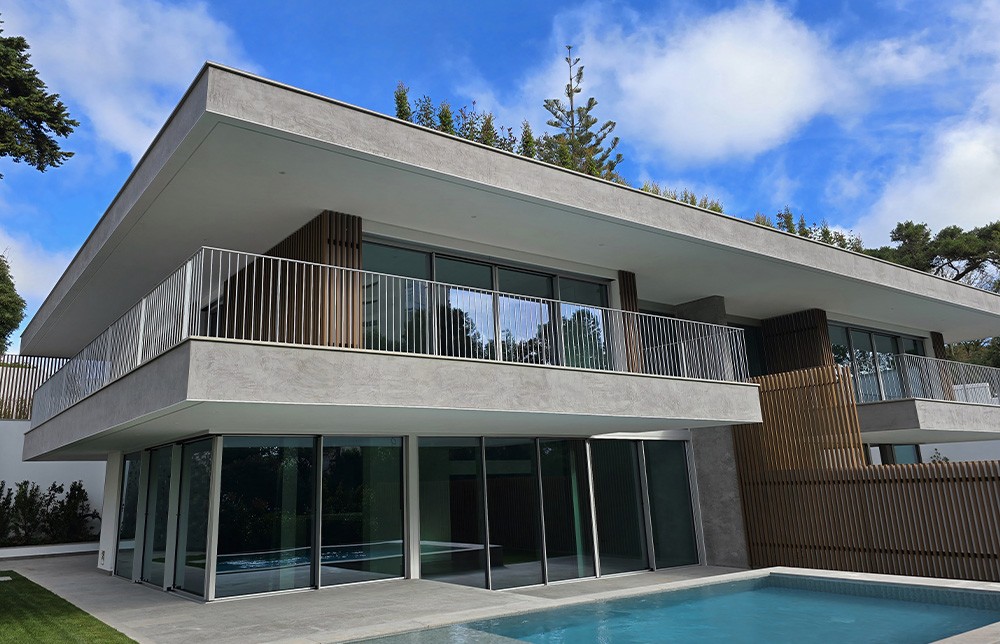
It becomes problematic, however, when the facade is conceived as a coherent composition in which each material is meant to maintain a lasting dialogue with the others.
Time: The New Design Parameter
In contemporary architecture, the facade is no longer a simple outer layer. It is a system, a precise assembly of materials, lines and proportions.
Yet time acts as a powerful revealer.
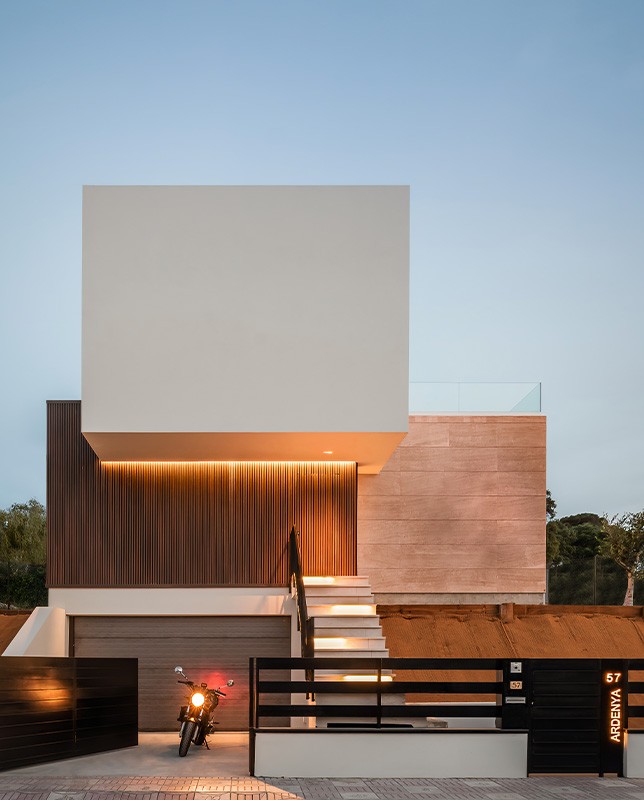
Aluminum retains its color. Glass remains stable. Concrete develops a slow patina.
Natural wood, however, evolves rapidly and unevenly.
Over the years, this differentiated ageing can produce a facade that no longer reflects the original design, disrupting the balance intended by the architect. The project continues to exist, but its architectural language gradually shifts beyond the designer’s control.
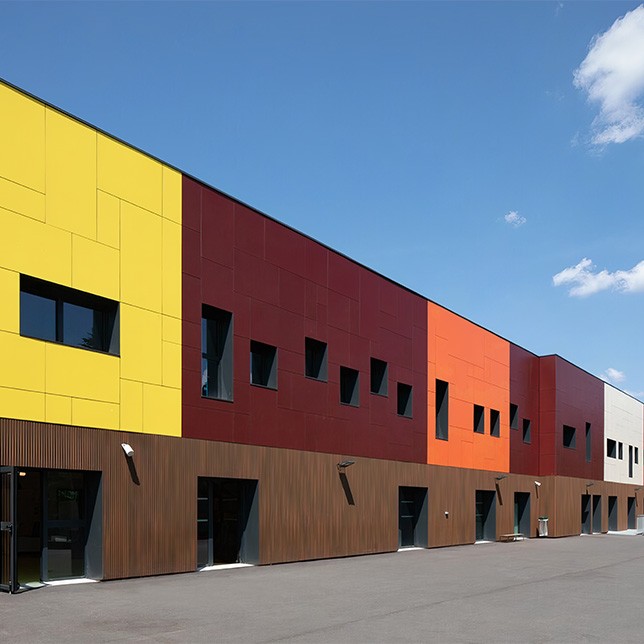
The Real Issue Is No Longer Design — It Is Compatibility of Ageing
For many architects, the key question is no longer “Is it beautiful?” but rather “Will it remain right over time?”
Co-extruded composite wood provides several structuring advantages:
low maintenance controlled long-term behavior compatibility with contemporary facade systems greater security for the building owner limitation of long-term aesthetic drift
Aesthetic durability is also a form of environmental durability. A material that requires neither repeated treatment nor premature replacement is, by definition, a responsible choice.
Conclusion — Designing Contemporary Facades That Keep Their Promises
Specifying a facade material today involves far more than the quality of a construction detail. It engages the coherence of the project over time and the fidelity to the architect’s initial intention.
In contemporary architectures built on a mix of materials, the real challenge is no longer the design itself, but the compatibility of how materials age together. When aluminum, glass and mineral materials remain stable, natural wood often becomes the breaking point in the composition.
Co-extruded composite wood provides a clear answer to this tension. Not by imitating wood, but by embracing a controlled, predictable and homogeneous behavior.
For architects, it represents:
a design tool serving long-term durability a lever for aesthetic coherence in mixed facades a secure specification choice and a contemporary response to demands for responsibility and longevity
Specifying co-extruded composite wood is not about abandoning materiality. It is about giving the project the means to endure, ensuring that time does not alter either its meaning or its architectural language.