

Version française
Deutsche Version
Nederlandse versie
The fight against climate change has become a global priority, and companies are playing a crucial role in this effort. The construction industry is one of the main contributors to global Greenhouse gas emissions.
In this experience-sharing article, we'll look at how our FELIX company, which specializes in the distribution of Fiberdeck® , FelixWood® and Cobrafastener® France brand cladding, fencing and decking, became aware of its impact by carrying out a carbon footprint and implemented a strategy to decarbonize its activities.
Understanding the scope of GHG emissions
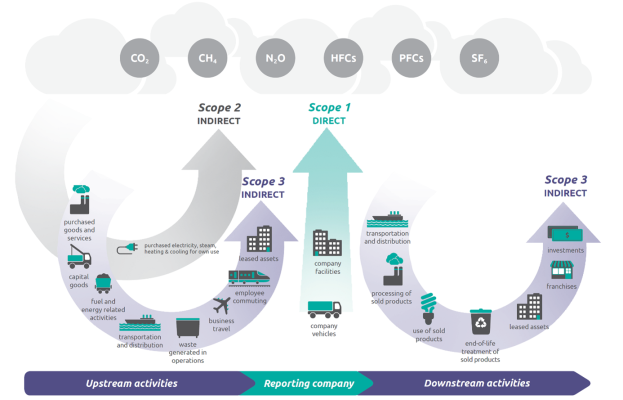
Before delving into our decarbonization strategies, it is essential to understand the three fields of GHG (greenhouse gas) emissions:
Scope 1: Direct emissions from sources controlled by the company. Scope 2: Indirect emissions linked to energy purchased by the company. Scope 3: Indirect emissions resulting from the company's activities but occurring outside its organizational boundaries.
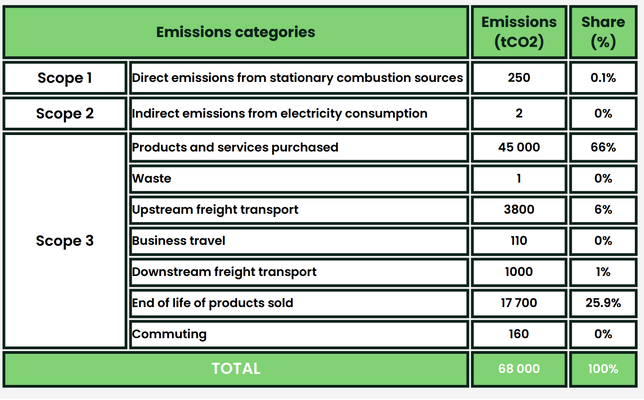
Our Scope 3 represents 99% of our emissions!
Felix's 2023 carbon assessment by Releaf Carbon revealed that the company's direct emissions (Scope 1 and 2) are very limited compared to those from product purchases (Scope 3). The latter account for 42,000 tonnes, or 68% of the carbon footprint.
Using LCA to measure emission factors
LCA is a systematic methodology that assesses the potential environmental impacts of a product or service throughout its life cycle, from raw material extraction to end-of-life, including manufacturing, distribution, use and disposal.
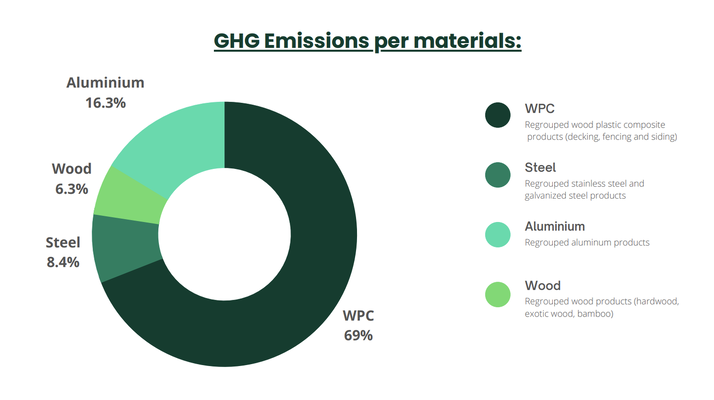
The LCAs of our main products – wood and composite decking, WEO® cladding, Boston fencing and Cobrafastener® accessories – have enabled us to classify products according to their emission factor.
Products made from WPC and aluminum (fencing and joists) account for 85% of our emissions. Conversely, FSC-certified tropical woods from sustainably managed forests have a positive emission (carbon sink).
By targeting these 3 specific areas, Felix can implement targeted reduction strategies to optimize its environmental impact.
Setting clear, measurable objectives
To measure our progress towards a more sustainable future, we have set ourselves clear targets to be achieved by 2030:
A 35% reduction in Scope 1 & 2 CO2 emissions. A 25% reduction in Scope 3. This measure reflects our determination to take into account our entire value chain and to assume our responsibility for the environmental impact of our products.
Decarbonization strategies for Felix
Supply chain optimization: Felix works closely with its suppliers to reduce the carbon footprint of its products. This involves adopting more sustainable production practices, using low-carbon materials and reducing waste.
1 – Increased use of recycled materials:
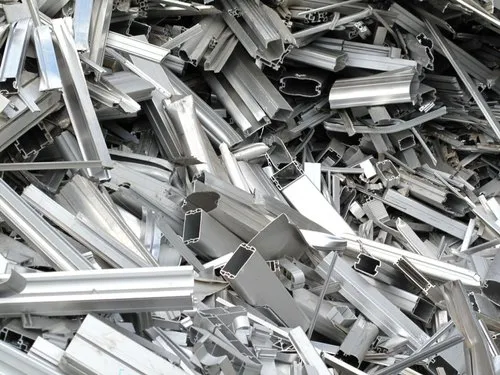
Our Fiberdeck® composite decking and cladding boards are already made from 95% recycled plastics and can no longer be optimized. On the other hand, the proportion of recycled aluminum in our products is only 10% to date, and our ambition is to significantly increase this to 40% by 2024 and 70% by 2030.
This measure reinforces our commitment to sustainability and the preservation of natural resources.
2 – Reducing energy consumption
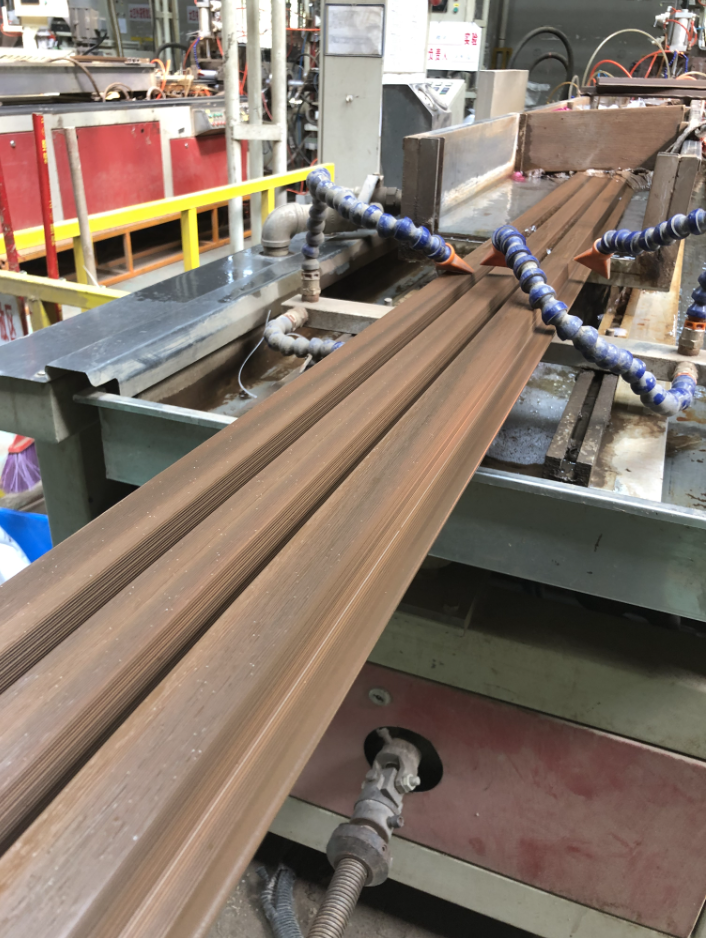
Energy consumption is by far the biggest contributor to GHG emissions in composite wood production.
To limit these emissions, we are working on 2 aspects: reducing energy losses from production machines, and above all the choice of energy sources.
By opting for renewable energy sources such as hydroelectricity, we are able to significantly reduce the carbon footprint of our composite wood production by a factor of x2.
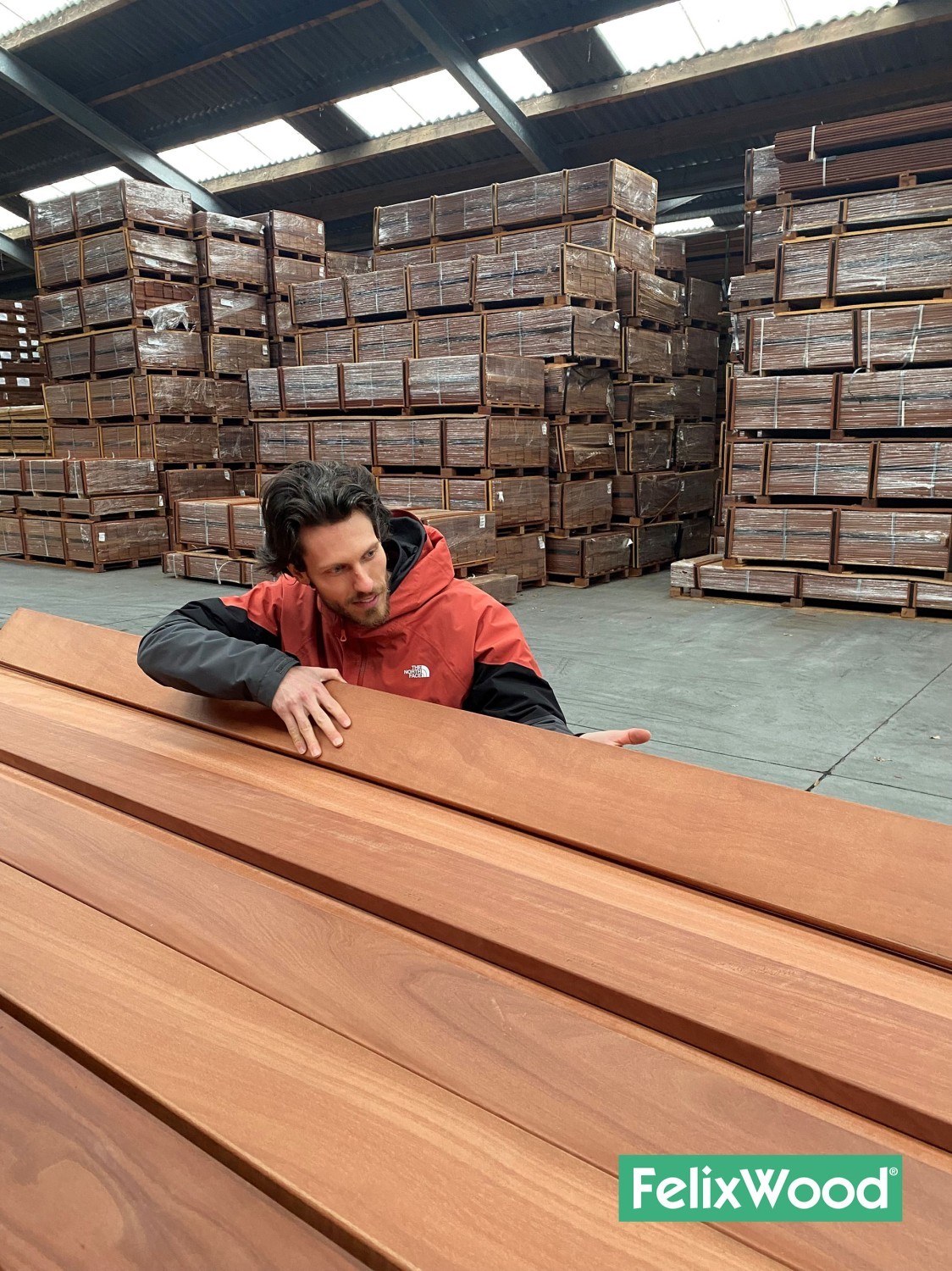
3 – 100% FSC-certified wood by 2030
Felixwood® FSC (Forest Stewardship Council) certified wood plays a crucial role in reducing our company's carbon footprint. By promoting responsible and sustainable forest management, the FSC label guarantees that wood comes from sustainably managed forests. These responsible forestry practices contribute to the conservation of forest ecosystems, the preservation of biodiversity and the capture of atmospheric carbon.
What's more, forests managed to FSC standards tend to store more carbon, as they are generally more mature and diverse, thus promoting a net reduction in greenhouse gas emissions. By choosing Felixwood® FSC-certified wood products, consumers and businesses are actively supporting the protection of tropical forests and helping to combat climate change by reducing their carbon footprint.
A collective call to action
At FELIX, we are convinced that every company has a role to play in the fight against climate change.
We firmly believe in the power of collaboration. That's why we will work closely with our suppliers to implement emission reduction plans. By encouraging our partners to adopt sustainable practices, we can amplify the positive impact of our collective efforts.
We therefore call on our partners, customers, employees and communities to join us in this endeavor. Together, we can make a real difference to a greener, more sustainable future for all.
In conclusion
Let's decarbonize now! At FELIX, we are fully committed to this crucial mission. Our ambitious goals testify to our determination to be agents of positive change. By taking concrete steps to reduce our carbon footprint, we are working towards a better future, more respectful of the environment and of future generations. Join us in our quest for sustainability!